
HR’s Secret Weapon: Compliance Automation in 2026
Compliance used to be something HR handled in waves—an annual handbook refresh, quarterly trainings, or a last-minute scramble when a new state requirement popped up. In 2026, that model is risky.
More employers are hiring across state lines. Pay transparency expectations are expanding. Documentation standards are higher. And when something goes wrong, regulators—and attorneys—don’t ask how hard you tried. They ask what you can prove.
That’s why HR compliance automation has become one of the smartest moves a growing business can make: it shifts compliance from a manual, error-prone process into a consistent, trackable system that runs in the background.
What Is HR Compliance Automation?
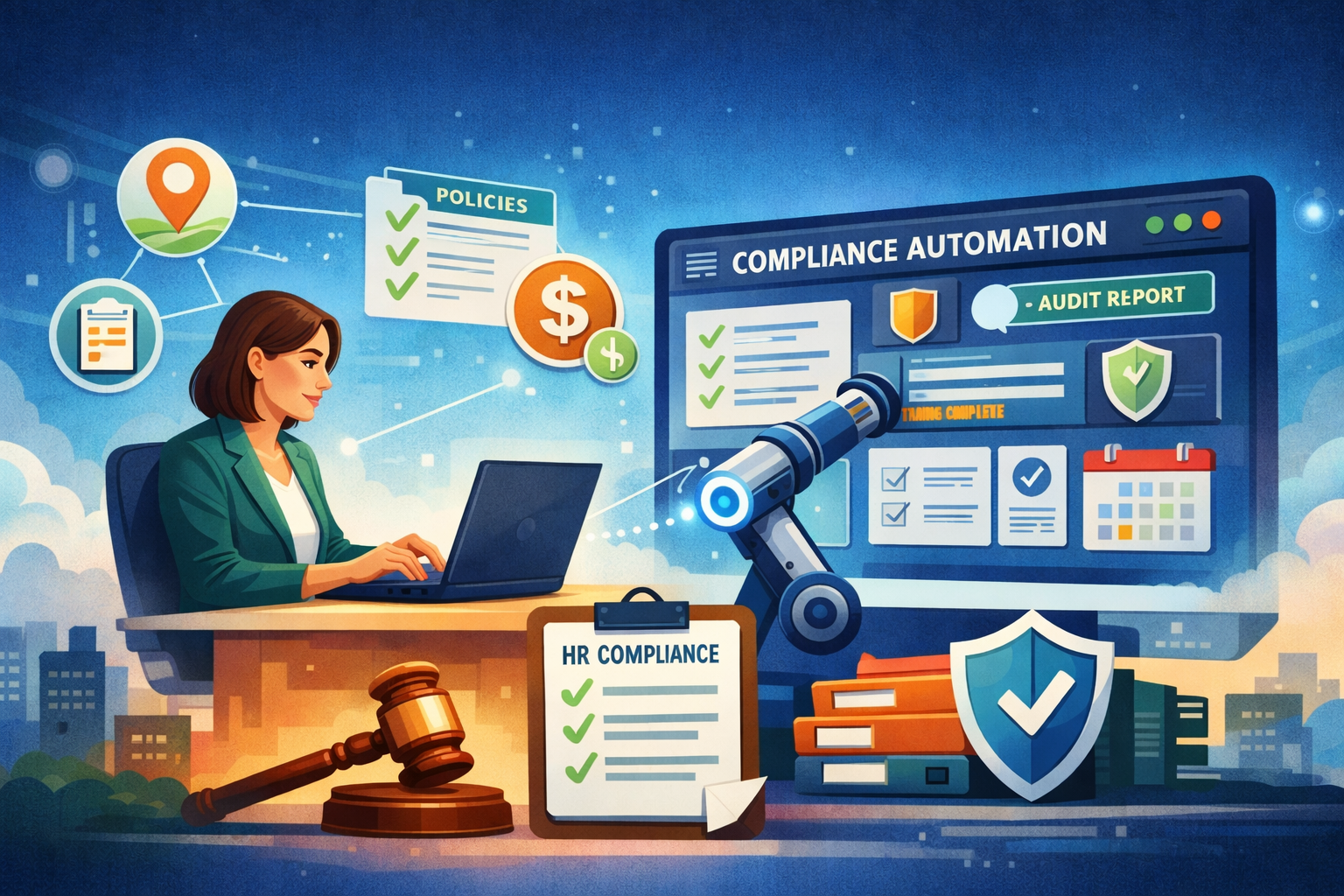
Compliance automation uses technology and workflows to help HR teams:
- Assign the right compliance steps based on role, location, and policy
- Trigger tasks automatically (notices, trainings, acknowledgements)
- Track completion with time-stamped records
- Escalate overdue items to managers or HR
- Produce audit-ready reports quickly
In simple terms: it helps you stay compliant by design, not by luck.
Why Compliance Automation Is Surging in 2026
Businesses aren’t adopting automation because it’s trendy—they’re adopting it because compliance complexity is increasing.
Multi-State Hiring Is Now the Norm
Even small businesses are onboarding employees in multiple states. That introduces different requirements for:
- New hire notices
- Paid leave rules
- Harassment prevention training
- Final pay timing and termination documentation
- Break and scheduling compliance (in certain states)
Automation helps ensure the correct steps are applied consistently without HR reinventing the wheel every time a new hire comes onboard.
Pay Transparency and Wage Compliance Are Moving Targets
More companies are expected to document compensation decisions, pay ranges, and job levels in a way that’s consistent and defensible. Automation supports:
- Standardized job description workflows
- Pay range documentation and approvals
- Offer letter templates that match policy
- Audit trails for pay adjustments and promotions
Documentation Matters More Than Ever
In 2026, documentation is often the difference between a quick resolution and a long, expensive dispute. Automated workflows can capture:
- Handbook acknowledgements by version and date
- Training completions and certificates
- Policy distributions and updates
- Corrective action documentation
- Incident and investigation records
When compliance is automated, the paper trail builds itself.
What HR Teams Should Automate First
If you’re looking for the biggest return with the least disruption, start with high-frequency and high-risk processes.
1) New Hire Compliance Onboarding
Automate the steps that must happen every time:
- Offer letters with consistent language
- Required policy acknowledgements
- Training assignments by job type
- E-signature tracking and document storage
2) Training Assignments + Tracking
Automation makes it easier to manage:
- Role-based training (manager vs. non-manager)
- Location-based training requirements
- Recurring compliance training schedules
- Reminders and escalations for overdue training
3) Employee Handbook + Policy Acknowledgements
One of the most common gaps in audits is proof employees received and acknowledged policies. Automation helps with:
- Version control (who got what, when)
- “Re-acknowledgement” when policies change
- Reporting for audit readiness
4) Timekeeping and Overtime Guardrails
For hourly workforces, automated alerts can reduce costly issues like:
- Missed breaks (where required)
- Unapproved overtime
- Misclassification red flags
- Policy exceptions without documentation
The Real Benefit: Less Risk, More Time, Better Consistency
Compliance automation isn’t about replacing HR—it’s about reducing administrative drag so HR can do higher-value work.
You get:
- Fewer missed deadlines and required steps
- More consistent onboarding and policy delivery
- Cleaner reporting for audits or due diligence
- Less time spent chasing signatures and training completions
And for employees, it often creates a smoother experience: clearer expectations, fewer surprises, and faster follow-through.
Common Mistakes to Avoid
Automation works best when it’s implemented thoughtfully.
- Messy employee data causes messy compliance. Titles, locations, and classifications must be accurate.
- Templates should reflect your real practices. Generic language can create risk if it doesn’t match reality.
- Automation needs owners. Someone must review alerts, update policies, and run monthly checks.
- Sensitive issues still require humans. Case management can be systematized, but empathy and judgment are still essential.
A Simple 30-Day Start Plan
If you’re not sure where to begin, here’s a straightforward approach:
Week 1: Identify your top compliance risks (multi-state onboarding, handbook gaps, training tracking, wage/hour risk)
Week 2: Document your current workflow and where it breaks
Week 3: Automate one process (usually onboarding or training)
Week 4: Build a monthly audit routine using dashboards and completion reports
Final Thoughts
Compliance in 2026 is too complex for “best effort” tracking. HR compliance automation gives businesses consistency, visibility, and proof—without burning out HR teams.
If your company is growing, multi-state, or simply tired of chasing paperwork, automation can become the foundation of a compliance program that actually scales.